
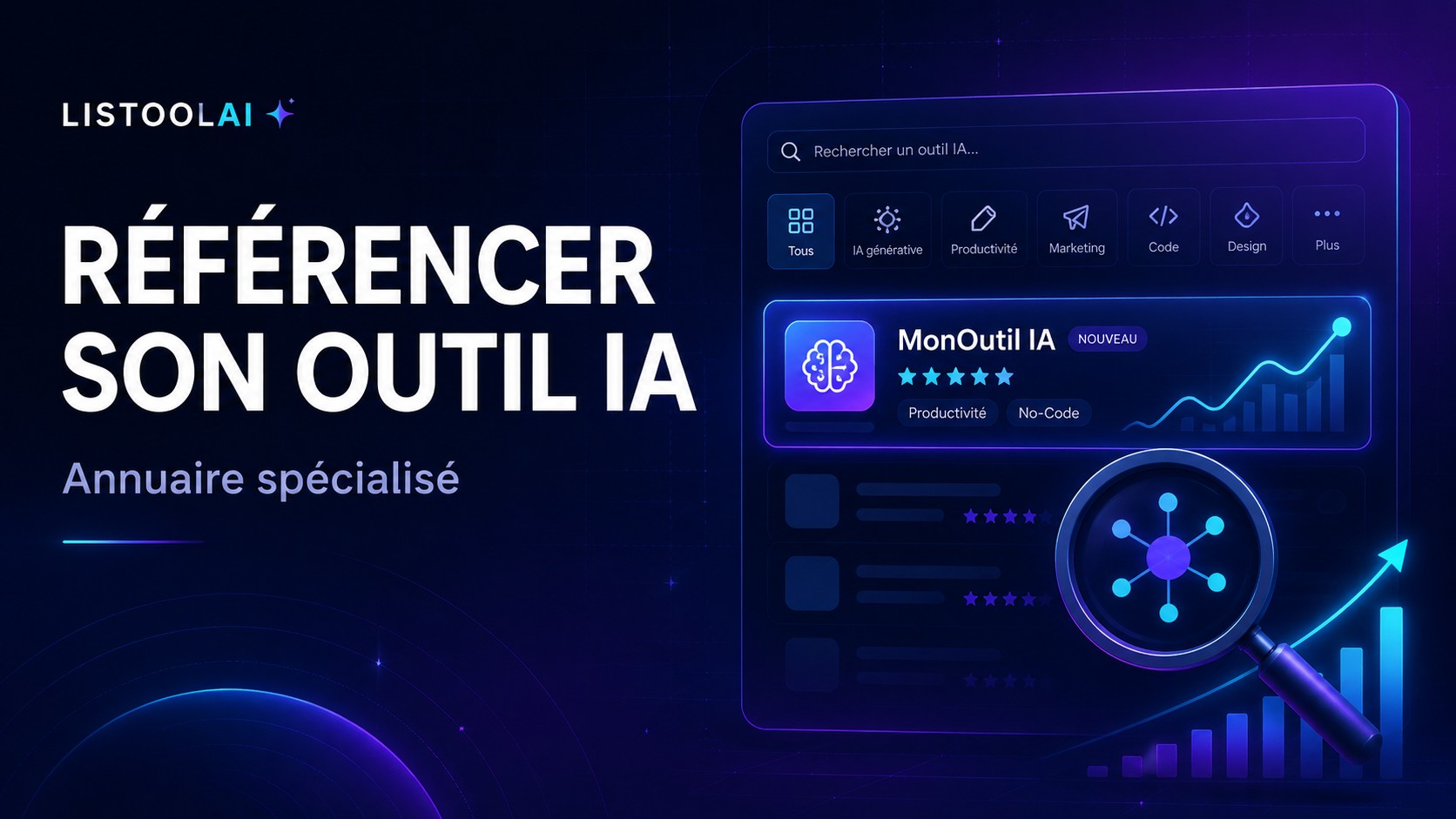
Why AI tool discoverability has become strategic
Launching an AI product is not enough. Users need to understand what it does, who it is for and why it is different. A specialized directory helps present that information in a structured environment.
1. Reach users already interested in AI
Directory visitors are actively looking for software, alternatives and comparisons.
Practical example
A prospect searching for an AI transcription tool is more qualified than a random social-media visitor.
2. Create a public page that search engines can index
A dedicated profile can target the product name, category, pricing and alternatives.
Why this matters
It gives search engines another structured source that describes the product.
3. Strengthen product credibility
A complete profile shows that the tool has a real website, clear positioning and useful information.
A strong listing should answer three questions
- What does the tool do?
- Who is it for?
- How much does it cost?
4. Attract more qualified traffic
Category pages and comparisons can bring users with a clear purchase or evaluation intent.
5. Appear in comparisons and alternatives
Users often search for “alternatives to” and “tool A vs tool B.” Directory relationships increase visibility in those journeys.
6. Improve internal linking and SEO presence
A profile connected to categories, collections and related tools creates stronger topical context.
Useful internal linking
Connect the product to its category, relevant alternatives and comparison pages.
7. Test marketing positioning
Questions to ask
Is the value proposition clear? Does the category match user expectations? Are the main use cases easy to understand?
8. Start with free visibility
A free listing can create an initial public presence without advertising spend.
9. Accelerate visibility with a boost
A paid visibility boost can place the tool in more prominent positions for a limited period.
10. Explain the product with a sponsored article
An article provides more space for use cases, positioning, pricing and product education.
Mistakes to avoid
Writing a vague description
Explain the problem solved and the target user.
Choosing the wrong category
Misclassification reduces relevance.
Failing to update the listing
Keep pricing, links and features current.
Neglecting images or logos
Use reliable, authorized visual assets.
Conclusion
A specialized directory can support visibility, SEO and trust. The benefit is strongest when the profile is accurate, complete and connected to relevant categories and comparisons.
What information should a directory profile contain?
A useful listing should include a precise description, target audience, pricing model, official website, key features, use cases, alternatives and clear visual identity. Incomplete pages create doubt and reduce click-through.
Directories support several discovery journeys
Users may discover a product through a category, a comparison, an alternative page, a collection or a search query for the product name. A well-connected profile can appear in all of these contexts.
How to improve the listing over time
Update screenshots, pricing and feature information after major changes. Add new integrations and clarify positioning when customer feedback reveals confusion.
Measure directory performance
Track profile views, outbound clicks, registrations and conversions. Use tagged links when possible so that traffic can be identified in analytics.
Quality matters more than quantity
Submitting the same generic description to hundreds of directories is less useful than maintaining a small number of accurate, relevant and trusted profiles.