
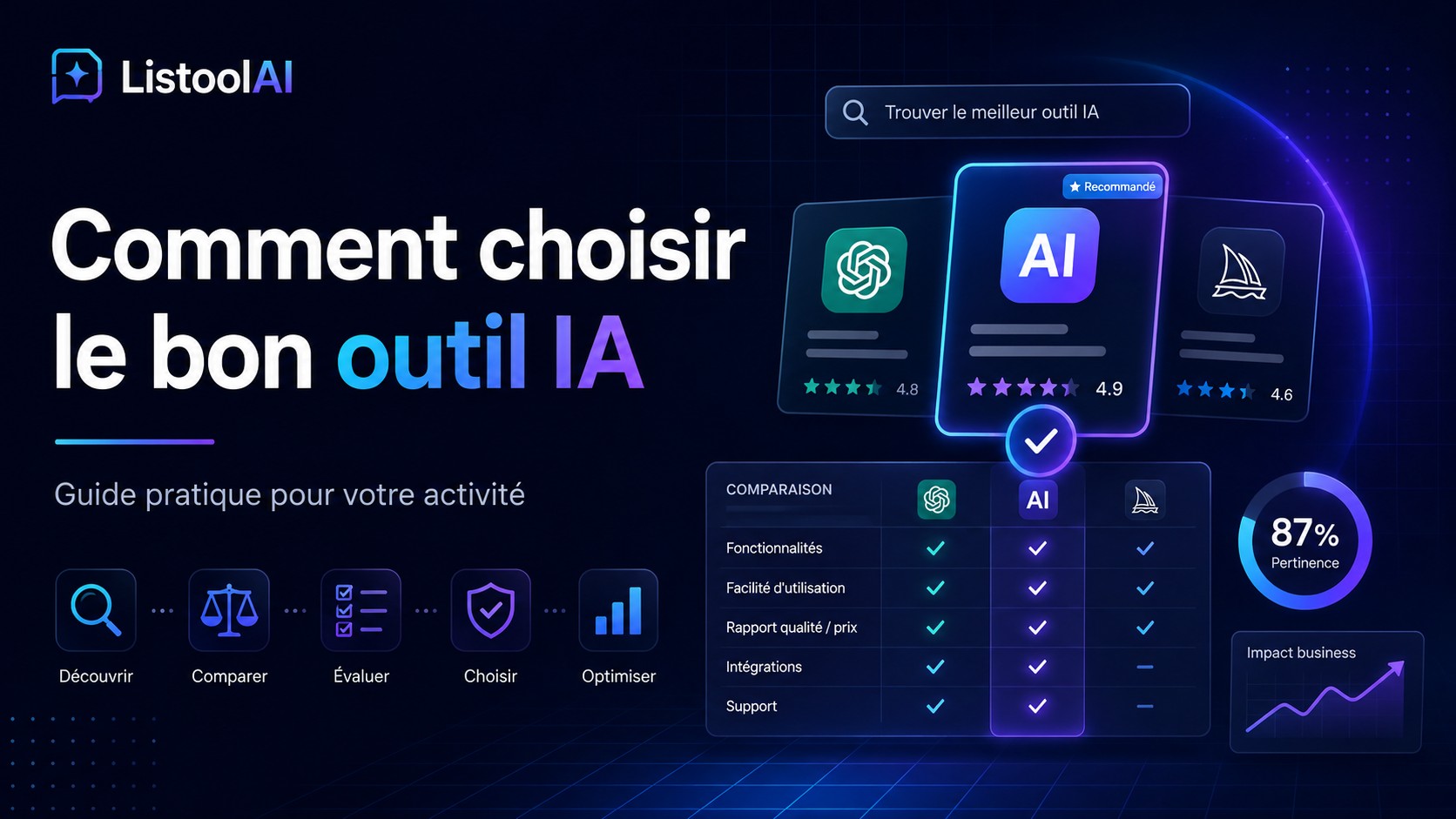
1. Define the problem before choosing the tool
Start with the task that creates friction. Do not begin with a product name. A clear problem such as “reduce time spent answering repetitive emails” is easier to evaluate than “we need an AI tool.”
2. Identify your primary use case
Choose one main objective: writing, automation, analysis, customer support, visual creation, prospecting or another specific workflow. A tool that performs one critical task well is often more valuable than a platform with dozens of unused features.
3. Compare the real cost, not only the advertised price
Review monthly price, usage limits, extra credits, team seats, API fees, storage and cancellation conditions. The cheapest plan may become expensive if it requires additional tools or manual work.
4. Check ease of use
A powerful product is not useful if the team cannot adopt it. Test onboarding, interface clarity, documentation and the number of steps required for a common task.
5. Test output quality
Use the same real examples in several tools. Evaluate accuracy, consistency, relevance and the amount of correction required.
6. Review available integrations
Check compatibility with your email, CRM, content-management system, analytics platform, cloud storage and automation tools. Poor integration can create more work than the AI removes.
7. Verify security and privacy
Review data retention, model-training policies, access controls, account management and compliance requirements. Sensitive business data should not be uploaded without understanding the provider’s policy.
8. Compare several alternatives
Do not choose the first tool you discover. Compare at least two or three options using the same evaluation criteria.
9. Use a decision checklist
- Does the tool solve the defined problem?
- Is the quality acceptable?
- Can the team use it easily?
- Does it integrate with existing systems?
- Are security conditions appropriate?
- Is the expected value greater than the cost?
10. For AI tool creators: think about visibility
A useful product still needs a clear public profile, accurate positioning and discoverability in relevant categories and comparisons.
Conclusion
The right AI tool is not necessarily the most popular or the most advanced. It is the one that solves a specific problem, fits your workflow and produces measurable value at an acceptable cost.
Build a short list before testing
After defining the use case, create a short list of three to five tools. Eliminate products that clearly fail on budget, language support, required integrations or data policy. This avoids wasting time on attractive tools that cannot fit the business.
Create a scored evaluation
Use a simple table with criteria such as output quality, ease of use, integrations, privacy, support, price and scalability. Give each criterion a weight based on business importance. For example, privacy may count more than design for a legal or healthcare workflow.
Run a real pilot
Use the tool with real users and real data that is safe to process. Test the complete workflow, not only a demonstration. Measure setup time, adoption, correction work and the effect on the final result.
Think about change management
A technically strong tool can fail if employees do not understand when and how to use it. Prepare short instructions, define approved use cases and identify who is responsible for support and governance.
Review after thirty days
Compare expected benefits with actual results. Keep the tool only if it improves speed, quality, revenue, customer experience or risk management in a measurable way.